Your Dedicated LEI Registration Partner — Get Support Across India
From a single LEI application to hundreds of entities, BharatLEI provides businesses and finance professionals with one dedicated point of contact for registration, renewal and ongoing LEI management.
Register or Renew LEI in 3 Simple Steps
Get your Legal Entity Identifier (LEI) quickly and securely with a simple online application process. Simple, secure and guided from application to issuance.

Choose your Application method for LEI registration
Choose the option that best suits your requirements.
Submit application for LEI registration online in 2 minutes OR Prefer expert assistance? Our LEI experts can help you with LEI registration, renewal, transfer and documentation, making the process simple and convenient from application to completion.

Submit Details, documents & payment
Fill your entity information and submit the required supporting documents. You can also submit details us for Assisted LEI registration. This helps to minimize errors and avoid unnecessary processing delays in LEI registration or renewal.

Track your application & receive your LEI code
Your LEI application is processed through the applicable LEI issuing organisation. Once the LEI registration is completed, your LEI number and registration details are shared with you by email and phone.
All you to need to know about LEI
Don’t Let Cost Confusion Delay Your LEI Registration.
Understand your LEI registration costs, Choose the right validity period and get the right support to move your LEI registration process forward.
1 year plan
requires Renewal after 1 year.
3 year plan
requires Renewal after 3 years.
5 year plan
requires Renewal after 5 years.
What Clients Say
Discover Our Clients’ Experiences with BharatLEI Services
4.8
Understanding Legal Entity Identifiers (LEI)
Understanding Legal Entity Identifiers and their role in global financial transactions.
What is LEI?
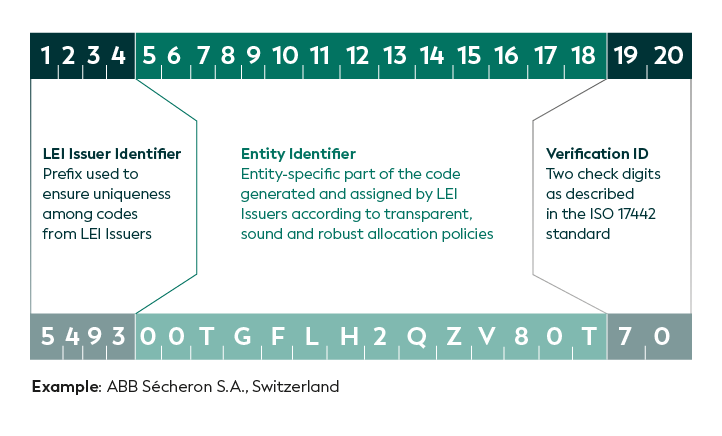
A Legal Entity Identifier (LEI) is a unique 20-character alphanumeric code used to identify a legally distinct entity involved in financial transactions. The LEI is based on the ISO 17442 standard and is linked to verified entity information, including the legal name, registration details and registered address.
An LEI provides a standardized way for banks, financial institutions, regulators and other market participants to identify businesses and organizations accurately. It helps answer the fundamental question “Who is who?” in financial markets and supports greater transparency, reliable entity identification and regulatory compliance.
Why do Businesses need an LEI?
Businesses may need an LEI (Legal Entity Identifier) to meet applicable regulatory, financial-market, banking or transaction-related requirements. The LEI provides a globally recognized identity for a legal entity, allowing financial institutions, regulators and counterparties to identify the organization accurately.
Depending on the type of entity and transaction, an LEI may be required for financial transactions, regulatory reporting, certain payments, securities transactions and cross-border financial activities. Keeping an LEI active also helps maintain accurate and accessible entity information within the Global LEI System.
Who Can Apply for an LEI?
Eligible legal entities can apply for an LEI, subject to the applicable validation and documentation requirements. In India, this may include private limited companies, public companies, LLPs, partnership firms, trusts, financial institutions and other eligible legal entities.
During LEI registration, the applicant’s legal information is verified against authoritative sources before the LEI is issued. The information must remain accurate and up to date so that the LEI continues to provide reliable identification of the entity.
Where is an LEI Used?
An LEI is used to identify legal entities in financial and regulatory transactions worldwide. It can be relevant to activities involving securities, derivatives, financial markets, regulatory reporting and other transactions where accurate identification of the participating legal entity is required.
Banks, financial institutions, regulators and other market participants can use LEI information to identify counterparties consistently across jurisdictions. This standardized identification helps improve transparency, risk management, regulatory reporting and traceability of financial transactions.

Get LEI Registration Assistance in India?
Get expert support with documentation, incorporation and the next steps to get your business started.
Legal Entity Identifier (LEI) in India
Understanding current LEI mandate in India
Introduction of Legal Entity Identifier (LEI) in India
The Legal Entity Identifier (LEI) in India has been introduced across a number of financial and regulatory use cases by the Reserve Bank of India (RBI) and other market participants.
RBI requires LEIs for specified entities and transactions in areas including regulated financial markets, large-value payment systems, borrowing arrangements and certain cross-border transactions. The exact requirement depends on the type of entity, transaction, market and applicable regulatory framework.
For example, RBI’s framework for large-value transactions through NEFT and RTGS requires LEI information for specified non-individual transactions of ₹50 crore and above.
RBI has also required LEI information for specified cross-border capital or current account transactions of resident non-individual entities at or above ₹50 crore per transaction, with banks required to validate LEI information against the global LEI database.
For borrowers, RBI has prescribed LEI requirements for specified non-individual borrowers having aggregate exposure of ₹5 crore and above from banks and financial institutions, subject to the applicable regulatory framework and timelines.
LEI Issuance in India
India has GLEIF-accredited LEI Issuers that provide LEI issuance and related services. LEI Register India Private Limited, is one such LEI Issuer in India’s LEI ecosystem. GLEIF also reported the addition of NSDL as another GLEIF-accredited LEI Issuer in India in 2024.
Businesses do not necessarily need to approach an LEI Issuer directly. GLEIF recognizes Registration Agents, which help legal entities access LEI Issuers for LEI issuance, renewal, transfer and related services.
Important distinction: A Registration Agent is not an LEI Issuer. The actual LEI issuance, renewal or transfer is performed by the relevant GLEIF-accredited LEI Issuer.
LEI Mandate in India
OTC derivatives markets: The Reserve Bank of India has mandated the implementation of the LEI system for all participants in the Over-the-Counter (OTC) markets for Rupee Interest Rate derivatives, foreign currency derivatives and credit derivatives.
Large corporate borrowers: The Reserve Bank of India has mandated the phase-wise implementation of the LEI system for all borrowers of banks in India. Entities without an LEI code are not to be granted renewal / enhancement of credit facilities.
Non derivative markets: The Reserve Bank of India has mandated the phase-wise implementation of the LEI system for Non-derivative markets include Government securities markets, money markets and non-derivative forex markets (cash, tom and spot transactions).
Eligible Foreign Entities: Securities and Exchange Board of India has mandated LEI code for Eligible Foreign Entities (EFEs) in the commodity derivatives market.
Insurers/Corporate borrowers: The Insurance Regulatory and Development Authority of India (IRDAI) has mandated implementation of the LEI system for all insurers and their corporate borrowers.
RTGS/NEFT Transactions: The Reserve Bank of India has mandated the LEI Number for all payment transactions of value ₹50 crore and above undertaken by entities (non-individuals) for Real Time Gross Settlement (RTGS) and National Electronic Funds Transfer (NEFT).
Cross Border Transactions: The Reserve Bank of India has mandated the LEI Number for cross border transactions such as capital or current account transactions of ₹50 crore and above. The timeline to obtain LEI Number is October 1,2022.
Legal Entity Identifier (LEI) for Borrowers: The Reserve Bank of India has mandated the phase-wise implementation of the LEI system for borrowers of banks and FIs in India greater than 5 crores. Entities without an LEI code are not to be granted renewal / enhancement of credit facilities.
Non-convertible securities, securitised debt instruments and security receipts: Securities and Exchange Board of India has mandated LEI code for issuers transacting in listed non-convertible securities and issuers transacting in listed securitised debt instruments and security receipts. The timeline to obtain LEI Number is September 1, 2023.
Foreign Portfolio Investors (FPIs): Securities and Exchange Board of India has mandated reporting of LEI code for Foreign Portfolio Investors (FPIs) to depositories (DPs) in India. The timeline to report LEI Number to DPs is January 23, 2024.
Documents Required for LEI Registration or LEI renewal
Find the essential documents required for LEI registration based on your business or organizational structure.
| Entity Type | Documents Needed for LEI registration or LEI renewal |
| Partnership | GST Certificate, Partnership deed and PAN, IEC, UDYAM (If partnership deed is provided, then UDYAM is mandatory) |
| Private Limited/ Limited/ LLP | Certificate of Incorporation, GST Certificate, IEC Certificate (ANY ONE) |
| Trust | GST Certificate & PAN – Trust deed & PAN – NGO Darpan (ANY ONE) |
| Society/ NGO/ Foundation/ AOP/ Academic Institution | GST Certificate & PAN – NGO Darpan Certificate – UDYAM Certificate & Bye Laws |
| Bank | GST Certificate & PAN or RBI license with Board Resolution & PAN |
| Sole Proprietorship | GST Certificate, IEC, UDYAM (all pages) (ANY ONE) |
| HUF | GST Certificate & PAN – UDYAM Certificate & Member list |
| Fund/Scheme | DEED & Board Resolution & PAN |
| Other | GST Certificate, Partnership deed or PAN, IEC, UDYAM (If a partnership deed is provided, then UDYAM is mandatory) |
Information Required for LEI Registration or Renewal in India
1. Registered office and legal entity details
2. Authorization of the person submitting the application
3. Letter of Authority or Board Resolution, where required
4. Latest audited financial statements, where required
5. Holding and ultimate-parent information, where applicable
6. Supporting documents required to verify the entity and its ownership or control structure
The uploaded documents may include audited financial statements, a Letter of Authority or general Board Resolution, and financial information relating to the holding and ultimate parent, where applicable.
LEI Registration in India
Getting an LEI number in India generally involves submitting the legal entity’s information and supporting documents to an LEI issuer through the applicable registration channel
An Overview of Global LEI System
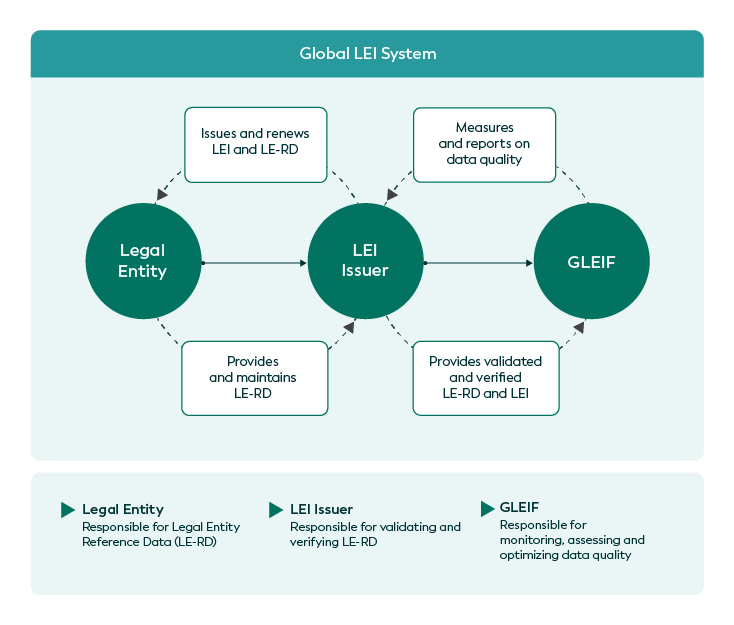
Steps to Register Legal Entity Identifier (LEI) in India:
Tell us what you need? — new LEI registration, LEI renewal, or LEI transfer. Our LEI support team will understand your entity type, explain the applicable requirements, and guide you through the Legal Entity Identifier registration process.
Whether you are registering an LEI for a Private Limited Company, Public Limited Company, LLP, partnership, trust, financial institution, or another eligible legal entity, our team can help you understand the required information and documentation before you apply.
Provide your legal entity details and supporting documents required for LEI registration, renewal, or transfer. Our team reviews the submitted information to help ensure that the legal name, registration details, registered address and other LEI reference data are accurate and complete.
Proper document and data verification helps minimize application errors, corrections and unnecessary processing delays and supports smooth processing through the applicable LEI Issuer.
Once your application has been successfully processed and the Legal Entity Identifier (LEI) is issued, renewed or transferred, we provide your 20-character LEI number and relevant registration details through your selected communication channel.
You can then use your LEI for applicable financial transactions, regulatory reporting, banking requirements, cross-border transactions and other situations where an LEI is required or requested.
Need help with your LEI? Whether you need LEI registration, LEI renewal or LEI transfer, our experts can guide you from application to completion.
LEI Renewal in India
How To Renew LEI?
An LEI is not a one-time registration. LEI information must be renewed and re-certified periodically so that the entity’s reference data remains current.
The LEI data record includes a Next Renewal Date, which identifies the date by which the LEI information must be renewed and re-certified.
Why is LEI renewal important?
A lapsed LEI may not be treated as valid for transactions or reporting requirements where a current LEI is required. RBI specifically states that lapsed LEIs are not considered valid for relevant regulated transactions.
Steps to Renew Legal Entity Identifier (LEI):
Search your existing LEI certificate and check its current status and next renewal date.
Review the legal name, registration details, registered address, ownership information and other relevant LEI reference data.
Provide the documents required for LEI renewal or modification.
Pay the applicable LEI renewal fee for the selected validity period.
The relevant LEI Issuer validates the information and renews the LEI.
After successful renewal, verify the new next renewal date and current LEI status.
Start LEI renewalLEI Transfer
Transfer of LEI in India | How to Transfer LEI – BharatLEI
Transferring an existing Legal Entity Identifier involves a few straightforward steps. The exact procedure and documentation may vary depending on the current LEI issuer, the receiving provider and the applicable LEI transfer requirements.
How to Transfer LEI – BharatLEI:
Identify the existing LEI number of your company, LLP or other legal entity. You can search for the LEI record using the entity’s legal name or other available identifying information.
Contact your preferred LEI service provider and request the transfer of your existing LEI. Provide the existing LEI number and the entity’s registered legal name so that the record can be identified.
Provide the details and authorisation required to initiate the transfer. Depending on the circumstances, supporting documents or confirmation from an authorised representative may be requested.
The receiving provider coordinates the transfer in accordance with the applicable procedures. Additional confirmation or clarification may be required if the entity’s information needs verification.
Once the transfer is completed, verify that your existing LEI number remains associated with the correct legal entity and that the record reflects the appropriate status and relevant information.
Start your LEI transfer with BharatLEI to receive assistance with the transfer process and the information required for your entity.
Questions Companies Ask Before LEI registration or Renewal
Why is an LEI registration required when my company already has a CIN, PAN and GSTIN?
A CIN, PAN and GSTIN identify a business within specific Indian regulatory and tax systems. An LEI serves a different purpose: it provides a globally recognized identifier for a legal entity involved in financial transactions. If your bank, financial institution, broker or regulatory framework requires an LEI, having a CIN or PAN does not substitute for an LEI.
My LEI registration is showing as Lapsed. Do I need a new LEI?
No, a Lapsed LEI does not normally mean that you need to obtain a new LEI. “Lapsed” means that the LEI was not renewed and its associated information was not revalidated by the applicable renewal date. The existing LEI generally remains the same and can be renewed to bring the LEI record up to date.
In most cases, you should renew the existing LEI rather than apply for a new LEI. A new LEI application may create an unnecessary duplicate record if the legal entity already has an existing LEI.
Our company name or registered address has changed. Do we need a new LEI code?
Not necessarily. A change in legal entity information does not automatically mean that a new LEI must be obtained. The existing LEI record can be updated and the changed information validated against appropriate sources. This can include changes to the legal name, address or other relevant reference information.
What should I do if my LEI details are incorrect or outdated?
If the information displayed against your LEI is incorrect or has changed, the entity should arrange for the LEI reference data to be corrected and validated. Keeping the LEI record accurate is important because banks, financial institutions and other data users may rely on the published LEI information.
What if my company does not have a parent company or cannot provide parent information for its LEI?
Not every entity will have reportable parent information. The Global LEI System provides specific reporting exceptions for situations such as non-consolidating structures, certain non-public relationships, or where a relevant parent does not have an LEI. The applicable reason needs to be reported rather than simply assuming that parent information is mandatory in every case.
Can I move my existing LEI management to BharatLEI?
If you already have an LEI managed by another LEI issuer, you may be able to transfer the LEI rather than applying for a duplicate LEI. BharatLEI can assist with understanding the transfer process, documentation and subsequent LEI management.
Can I transfer my existing LEI to another LEI issuer without getting a new LEI?
Yes. An existing LEI can be transferred to another GLEIF-accredited LEI Issuer. The purpose of an LEI transfer is to change the organisation responsible for managing and maintaining the LEI record, not to create a new LEI. The existing 20-character LEI remains unchanged after the transfer. The receiving LEI Issuer takes over the management of the LEI record and continues the applicable validation and maintenance process.
My bank says my LEI is not valid. How can I check what is wrong?
First, check the LEI’s published registration status, next renewal date, and entity information. A status of “Lapsed” means that the LEI has passed its renewal date without the required revalidation of its associated information. It does not, by itself, mean that the legal entity has ceased to exist.
You should also verify that the legal name, registered address, registration details, and other entity information in the LEI record match the information maintained by your bank or financial institution. If the LEI is lapsed, the existing LEI can generally be renewed and revalidated rather than obtaining a new LEI.
What happens if I miss my LEI renewal date?
If the LEI is not renewed by its next renewal date, its registration status can change to “Lapsed.” The applicable LEI Issuer then follows the relevant validation and status procedures. Timely LEI renewal helps keep the entity’s LEI record current, accurate, and validated, which can support compliance with applicable banking, regulatory, and financial transaction requirements.
Can the same LEI be used with different banks and financial institutions?
Yes. An LEI identifies the legal entity, rather than a specific bank account or individual bank. Therefore, the same valid LEI can be provided to different banks, brokers, financial institutions, and other counterparties. The LEI remains associated with the legal entity regardless of which bank or financial institution the entity uses.
Can a CA or CS manage LEIs for multiple companies?
Yes. An LEI identifies the legal entity, not a specific bank account or individual bank. The same valid LEI can therefore be provided to different banks, brokers, financial institutions, and other counterparties whenever an LEI is required for transactions involving that entity. The LEI remains linked to the legal entity itself, regardless of which bank or financial institution the entity uses.
Can multiple company LEIs be registered or renewed together?
Yes. Where several eligible entities require LEIs, their applications or renewals can be coordinated as a portfolio rather than handled individually. This can be particularly useful for corporate groups, businesses with multiple entities and CA/CS professionals managing LEIs for clients.
भारतLEI 🇮🇳
BharatLEI is Official Partner of LEI Register India Private Limited Official Registration Agent of
Ubisecure Oy (Ubisecure RapidLEI)
LEI: 529900T8BM49AURSDO55,
Nasdaq CSD SE (Nasdaq LEI)
LEI: 485100001PLJJ09NZT59